|
|
ACG | Policy and Practice News |
|
|
|
|
|
Highlights from this edition include:
-
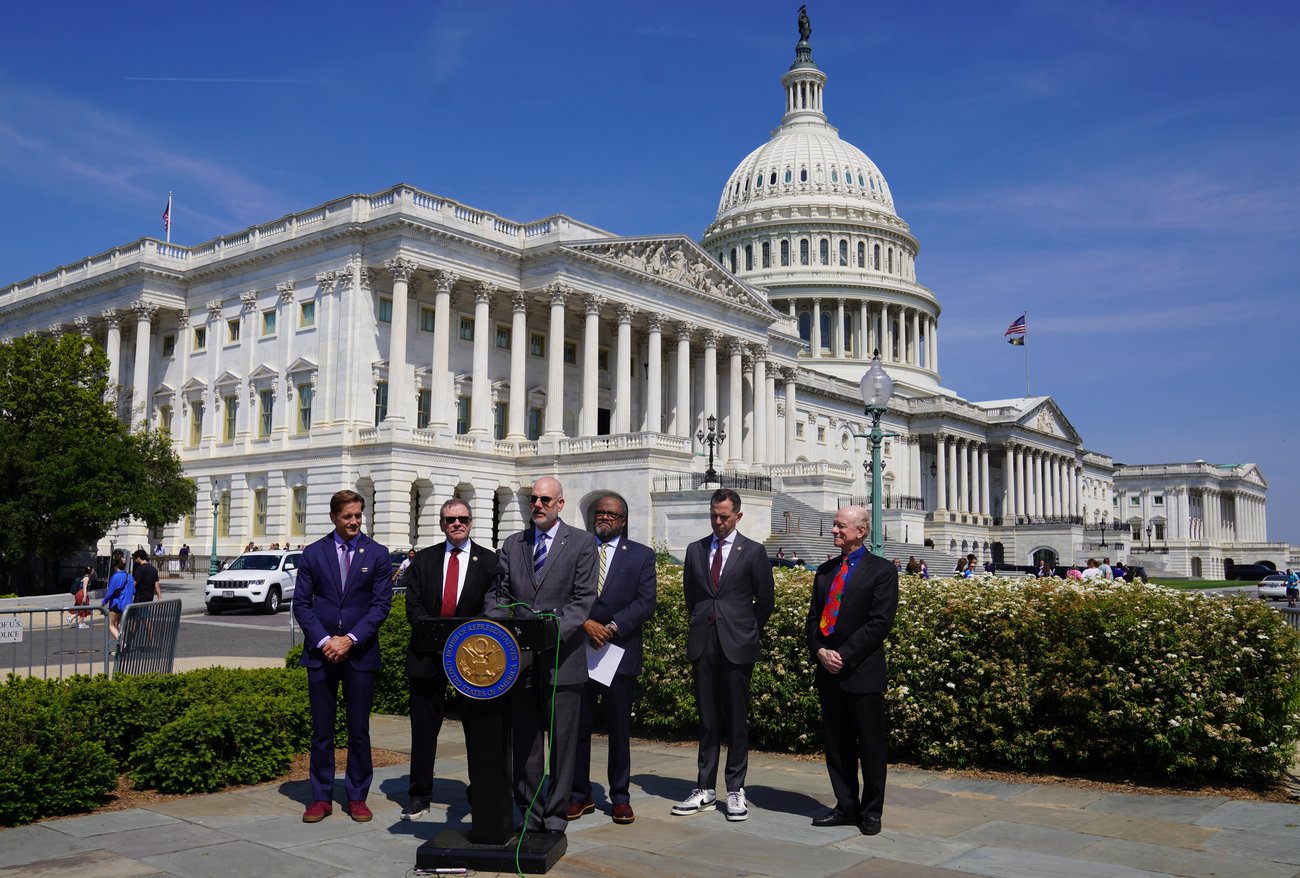
Rep. Troy Carter (D-LA) and Rep. Rich McCormick, MD (R-GA) relaunched the Congressional Men's Health Caucus – ACG is proud to support the caucus' important work of ensuring men take proactive steps to protect their health.
-
ACG sent a letter to the NIH, urging the agency to reinstate funding for CEGIR's essential research.
-
In a new Brains & Guts podcast episode, Dr. Rajesh Keswani discusses how AI can improve endoscopy quality.
|
|
|
|
|
Congressional Men's Health Caucus Relaunched |
|
|
|
|
|
On Thursday, Rep. Troy Carter (D-LA) and Rep. Rich McCormick, MD (R-GA) announced they will serve as co-chairs for the bipartisan Congressional Men's Health Caucus, alongside Reps. Neal Dunn (R-FL), Ted Lieu (D-CA), and Rob Menendez (D-NJ).
At a press conference, Rep. Carter reflected on the leadership of the late Rep. Donald Payne, Jr., a past chairman of the caucus and champion of colorectal cancer screening, among many other men’s health and preventive care issues.
ACG Executive Director Brad Stillman also offered remarks about the critical importance of colorectal cancer screening and a reminder that '45 is the new 50'!
ACG is honored to partner with Congress to inspire men everywhere to take charge of their health and looks forward to future collaboration with the caucus. |
|
|
|
|
|
|
|
|
|
Bite-sized ACG public policy and advocacy updates |
|
|
|
ACG Urges NIH to Reinstate Funding for CEGIR
This week, ACG sent a letter to National Institutes of Health (NIH) Director Dr. Jay Bhattacharya, imploring the agency to recommit critical funding for CEGIR, a leading authority for research and treatment of eosinophilic gastrointestinal disorders (EGIDs).
Earlier this month, the NIH withdrew CEGIR’s grant application, citing a policy change.
ACG knows the impact on our local communities and patients will be profound, and we conveyed these concerns directly to the NIH. If funding is not reinstated, nearly 1,000 patients will lose access to CEGIR-affiliated clinical trials and ground-breaking care.
Read the letter >
President's FY 2026 Budget Includes 26% Cut for HHS
On Friday, the White House announced its proposed budget for FY 2026. The proposal calls for a 26% cut to the Department of Health and Human Services' budget as part of an overall $136 billion reduction in non-defense spending.
Although this budget is a proposal – Congress will ultimately decide funding levels for federal agencies – it does signify the Trump Administration's priorities and continued focus on reducing the size of the federal government.
In the media: Why ACG Filed an Amicus Brief on Colorectal Cancer Screening
In a new article from Gastroenterology & Endoscopy News, ACG President Amy Oxentenko, MD, FACG explains the stakes in Kennedy v. Braidwood for preventive care access, including colorectal cancer screenings.
“There is nothing controversial about CRC screening and prevention,” said Dr. Oxentenko. “CRC screening and prevention should be apolitical—where we all come together. We need to reduce barriers to care access, not create more, such that everyone has the opportunity to maintain health.”
The Supreme Court is expected to rule on the case in June or July.
Read more > |
|
|
|
|
New Brains & Guts Episode |
|
|
|
|
|
In the latest episode of Brains & Guts, we are excited to welcome Dr. Rajesh Keswani, a nationally-recognized expert in interventional endoscopy and healthcare quality.
In the conversation, Dr. Keswani walks us through how to approach implementing computer-aided polyp detection (CAD-E), including: |
|
|
-
Measuring the specific impact of AI on quality
-
Obtaining buy-in from peers and leadership
-
Adopting CAD-e as the standard of care, even without a specific billing code
-
Addressing challenges, like the long lead-time between implementation and results, and the possibility of merely identifying diminutive polyps, or incidental-omas
|
|
|
|
|